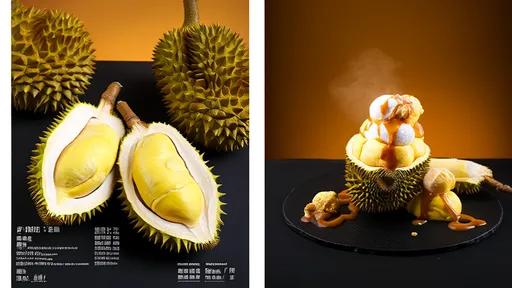
There are few fruits in the world that evoke such strong, polarized reactions as the durian. Known throughout Southeast Asia as the "King of Fruits," it commands a cult-like following among its devotees, while simultaneously repelling others with its notoriously pungent aroma. To the uninitiated, the durian’s smell has been compared to anything from rotting onions and gym socks to turpentine. Yet, to its lovers, that very same scent is a complex, fragrant promise of the rich, custard-like delight hidden within its spiky, formidable exterior.
But the durian is more than just a fruit of sensory extremes; it is also a subject of nutritional fascination. It is both celebrated for its dense nutrient profile and scrutinized for its high caloric content. This duality places it at the center of a modern dietary dilemma: can something so nutritionally potent also be a healthy regular choice, given its energy density? The durian, therefore, isn't just a fruit; it's a conversation about balance, tradition, and contemporary health consciousness.
The Allure of the Crown: A Nutritional Powerhouse
To understand why the durian has been crowned the "King of Fruits," one must look beyond its divisive aroma and into its impressive nutritional portfolio. It is far more than a simple sugary treat. Durian is packed with an array of vitamins, minerals, and beneficial plant compounds that are uncommon in most other fruits.
It is an excellent source of energy, yes, but that energy comes packaged with a significant amount of dietary fiber, which aids in digestion and helps modulate blood sugar levels. Furthermore, durian is rich in Vitamin C, a powerful antioxidant crucial for immune function and skin health, and contains more of certain B vitamins than most other fruits. These B vitamins, including thiamine, riboflavin, and B6, play vital roles in energy metabolism, neurological function, and red blood cell production.
Perhaps most notably, durian is a unique fruit source of the essential amino acid tryptophan, a precursor to serotonin and melatonin. This gives some scientific credence to the local belief that consuming durian can induce feelings of happiness and well-being, and even contribute to better sleep. The fruit also boasts a high mineral content, particularly potassium, which is vital for heart health and regulating blood pressure, as well as copper, iron, and manganese.
The Other Side of the Throne: The Caloric Conundrum
However, the crown sits heavy. The very density that makes the durian so nutrient-rich also makes it exceptionally high in calories and carbohydrates. A single serving of durian can contain significantly more calories than an equivalent serving of most other fruits. This is primarily due to its high carbohydrate content and its unique fat composition.
Unlike fruits like watermelon or oranges, which are mostly water, durian has a thick, creamy flesh that is higher in fats. While these are primarily healthy monounsaturated fats, similar to those found in avocados, they nonetheless contribute to the overall calorie count. This creates a very real tension for the health-conscious consumer. Is the bounty of vitamins, minerals, and fiber worth the caloric cost?
For individuals managing their weight or monitoring conditions like diabetes, this question is not trivial. The high glycemic index of some durian varieties means it can cause a rapid spike in blood sugar levels if consumed in large quantities. The traditional advice in regions where durian is grown is one of moderation and awareness. It is often considered "heaty" in Traditional Chinese Medicine, believed to raise body temperature, and is frequently advised against being consumed with alcohol due to potential digestive discomfort.
A Cultural Icon and an Economic Force
The debate around durian is not confined to nutrition labels; it is deeply woven into the cultural and economic fabric of Southeast Asia. In countries like Thailand, Malaysia, and Indonesia, durian orchards are major agricultural enterprises. The fruit is a significant export commodity, with frozen durian pulp and whole fruits being shipped to eager consumers in China, Vietnam, and increasingly, Western countries.
The culture surrounding durian is one of ritual and community. Families and friends often gather for durian feasts, where several fruits are cracked open and shared. There is a whole lexicon dedicated to selecting the perfect fruit—judging the sound of a tap, the look of the stem, and the intensity of the aroma. Connoisseurs can distinguish between dozens of cultivars, each with its own unique taste, texture, and smell, from the bittersweet complexity of the Malaysian Musang King to the sweet, sticky richness of the Thai Monthong.
This cultural significance adds another layer to the consumption dilemma. It is not merely a snack; it is an experience, a social event, and a taste of home for many. To reject durian is, in some ways, to distance oneself from a rich cultural tradition. This emotional and cultural value often outweighs the purely nutritional calculus for those who love it.
The Ultimate Weighing of the Scales
So, where does this leave us with the "King of Fruits"? Is it a superfood to be embraced or a caloric indulgence to be avoided? The answer, as with most things in nutrition and life, is not a simple binary. The durian embodies the ultimate trade-off.
It is undeniably a source of powerful nutrition, offering a spectrum of micronutrients that are difficult to find in such concentration elsewhere in the fruit kingdom. For individuals with high energy needs or those seeking a nutrient-dense whole food, durian can be an excellent choice. However, its high energy density means that portion control is absolutely paramount. It is a fruit to be savored in moderation, not consumed in excess.
The modern fascination with durian in the West mirrors a broader trend of exploring global superfoods. As it becomes more available outside Asia, it is being discovered by a new generation of food adventurers and health enthusiasts. They are learning to look past its infamous smell and appreciate it for what it truly is: a complex, rich, and powerful fruit that demands respect.
In the end, the durian teaches a valuable lesson about dietary balance. Very few foods are entirely "good" or "bad." Context, quantity, and overall diet pattern are what truly matter. The durian is a monarch with two faces: one of immense nutritional generosity and another of formidable caloric power. To enjoy its benefits without succumbing to its drawbacks, one must approach the throne with knowledge, respect, and a healthy sense of moderation. The king rewards the mindful.
By /Sep 9, 2025
By /Sep 9, 2025

By /Sep 9, 2025
By /Sep 9, 2025

By /Sep 9, 2025

By /Sep 9, 2025
By /Sep 9, 2025

By /Sep 9, 2025

By /Sep 9, 2025

By /Sep 9, 2025
By /Sep 9, 2025
By /Sep 9, 2025

By /Sep 9, 2025
By /Sep 9, 2025
By /Sep 9, 2025
By /Sep 9, 2025

By /Sep 9, 2025
By /Sep 9, 2025

By /Sep 9, 2025
By /Sep 9, 2025
