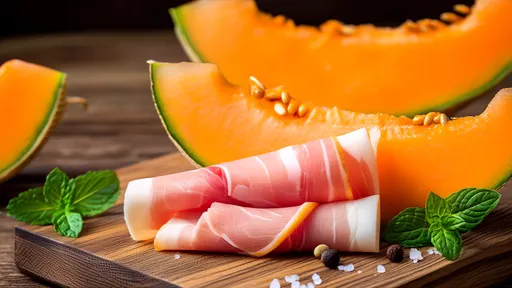
In the world of culinary pairings, few combinations are as celebrated and timeless as prosciutto di Parma and melon. This classic Italian antipasto, with its perfect balance of salty and sweet, has graced tables for centuries, captivating palates and inspiring chefs and home cooks alike. But what is the science behind this seemingly simple yet profoundly harmonious duo? The answer lies in a fascinating interplay of taste perception, chemistry, and even a touch of psychology.
The experience begins with the prosciutto itself. Prosciutto di Parma, a dry-cured ham from the Parma region of Italy, is a product of time, tradition, and terroir. The curing process, which involves salting and then air-drying the ham for a minimum of 12 months, concentrates its flavors and creates a complex profile. The dominant taste is, of course, saltiness, derived from the sea salt used in preservation. But it's not just sodium chloride at work. During the long aging process, enzymes break down proteins into amino acids, notably glutamate, which imparts a deep, savory umami flavor. Fats also undergo lipolysis, releasing fatty acids that contribute to a rich, buttery, and slightly nutty aroma. The result is a ham that is intensely salty and savory, with a delicate, almost melt-in-your-mouth texture.
Enter the melon, typically a ripe, fragrant cantaloupe or honeydew. At the peak of ripeness, these melons are bursting with natural sugars—primarily sucrose, fructose, and glucose—which provide a powerful sweetness. This sweetness is not one-dimensional; it's accompanied by a lush, juicy texture and a floral, musky aroma created by a cocktail of volatile compounds like esters and sulfur compounds. The high water content of the melon is crucial, as it provides a refreshing and cleansing element. This combination of high sugar content and hydration makes the melon the ideal counterpoint to the dense, salty ham.
The magic happens when these two elements meet on the palate. This is where the science of taste perception comes into play. Our tongues have receptors for five basic tastes: sweet, salty, sour, bitter, and umami. The combination of prosciutto and melon creates a dynamic contrast that stimulates these receptors in a particularly pleasurable way. The intense saltiness from the ham actually heightens the perception of sweetness in the melon. This is a well-documented phenomenon known as taste contrast. Similarly, the sweetness of the fruit can make the salty, umami-rich flavors of the prosciutto seem even more pronounced and complex. They don't cancel each other out; instead, they elevate each other, creating a taste experience that is greater than the sum of its parts.
Beyond simple contrast, there is a phenomenon known as taste synergy. The specific compounds in each food interact to create new, more rounded flavors. The umami compounds in the prosciutto, particularly glutamate, have been shown to enhance the perception of sweetness and overall "mouthfeel," making the melon taste even richer and more satisfying. This synergy helps blend the two distinct flavors into a unified, harmonious sensation that feels complete and balanced on the tongue.
The experience is further enhanced by texture and aroma. The silky, slightly chewy texture of the prosciutto contrasts beautifully with the soft, yielding crunch and juiciness of the ripe melon. This textural interplay keeps the eating experience interesting and prevents either component from becoming monotonous. Aromatically, the earthy, savory, and fatty scents from the ham intertwine with the bright, sweet, and floral notes from the melon, creating a complex bouquet that travels retronasally from the mouth to the olfactory receptors in the nose. This is why smelling the combination is almost as enjoyable as tasting it; the aroma primes the brain for the flavor explosion to come.
There is also a psychological and cultural dimension to this pairing. The combination of meat and fruit is a classic trope in many cuisines around the world, from pork with applesauce to duck à l'orange. This suggests a deep-seated human attraction to the balance of savory and sweet. The pairing feels intuitively right and satisfying because it covers a broad spectrum of primal taste desires—energy-rich sweetness and vital minerals from salt—in a single bite. In Italian culture, this antipasto is also served as a starter for a practical reason: the sweetness of the melon can stimulate appetite and prepare the digestive system for the richer courses to follow.
Finally, the quality of the ingredients is paramount. The science behind the pairing is most evident when using authentic Prosciutto di Parma, which has a Protected Designation of Origin (PDO) status, ensuring it is made according to strict traditional methods. Likewise, a melon that is perfectly ripe and in season will have the optimal sugar content and aroma to stand up to the powerful ham. When these top-quality ingredients come together, they execute a perfect ballet of contrasting and complementary elements on the palate, a true testament to the fact that sometimes, the most simple pairings are a masterpiece of culinary science.
By /Sep 9, 2025
By /Sep 9, 2025
By /Sep 9, 2025
By /Sep 9, 2025
By /Sep 9, 2025
By /Sep 9, 2025
By /Sep 9, 2025
By /Sep 9, 2025

By /Sep 9, 2025
By /Sep 9, 2025
By /Sep 9, 2025
By /Sep 9, 2025
By /Sep 9, 2025
By /Sep 9, 2025
By /Sep 9, 2025
By /Sep 9, 2025
By /Sep 9, 2025
By /Sep 9, 2025
By /Sep 9, 2025
By /Sep 9, 2025
