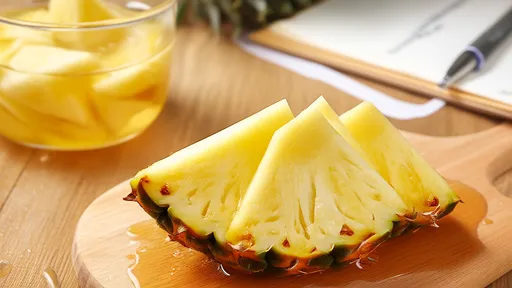
The curious case of pineapple's peculiar prickling sensation on the tongue has puzzled palates and perplexed scientists for generations. That sharp, almost electric zing followed by a lingering rawness can turn the sweet tropical delight into a paradoxical experience of pleasure and pain. For centuries, culinary traditions, particularly across tropical regions where pineapples grow, have advocated a simple yet seemingly mystical solution: a brief soak in salted water. But does this folk remedy hold any scientific merit, or is it merely kitchen-table superstition passed down through the ages?
To unravel this mystery, we must first journey into the microscopic battlefield occurring within the fruit itself. The primary culprit behind pineapple's "bite" is a powerful enzyme called bromelain. This enzyme is a protease, meaning its biological function is to break down proteins. It's so effective that it's used commercially as a meat tenderizer. When you eat fresh pineapple, the bromelain launched into action, attacking the proteins that make up the cells on your tongue, cheeks, and lips. It's essentially digesting you as you digest it, leading to that characteristic soreness and tenderness.
This defensive mechanism is the pineapple's evolutionary armor. In the wild, it protects the fruit from insects and other pests, ensuring the seeds can develop and propagate. The uncomfortable sensation is a warning sign, a biochemical declaration that this sweet prize must be consumed with caution. The intensity of this effect can vary dramatically between different varieties of pineapple and their ripeness. Generally, riper fruit contains slightly less active bromelain, but the enzyme remains potent enough to cause noticeable irritation.
Enter the traditional antidote: the saltwater bath. The practice is simple—dissolve a small amount of table salt (sodium chloride) in water and submerge the freshly cut pineapple chunks for a few minutes before draining and serving. Proponents swear by its efficacy, claiming it tames the fruit's aggressive edge, resulting in a smoother, sweeter, and utterly pain-free eating experience. The question for science is how, or if, this could possibly work.
The explanation is not one of magic, but of basic chemistry and molecular interaction. Salt, or sodium chloride (NaCl), when dissolved in water, dissociates into sodium (Na+) and chloride (Cl-) ions. These charged particles are hypothesized to interact with the bromelain enzyme. Enzymes are complex proteins whose function is dependent on their precise three-dimensional shape. This shape is maintained by various bonds, including weak ionic bonds. The introduction of a high concentration of ions from the salt can disrupt these ionic bonds, potentially altering the enzyme's shape.
If the shape of an enzyme changes, it often loses its functionality—a process known as denaturation. By soaking the pineapple in saltwater, we may be partially denaturing the bromelain enzyme on the surface of the fruit, rendering it less effective at breaking down the proteins in our mouths. It doesn't eliminate the bromelain, but it could significantly reduce its activity right at the point of contact, creating a barrier between the enzyme and your tongue.
Furthermore, there's a fascinating neurological component at play. Our tongues are equipped with taste buds and sensory receptors that detect various stimuli, including salt. The sodium ions from the saltwater might temporarily interfere with or "occupy" the pain receptors on the tongue that would otherwise be screaming about the bromelain attack. It's a sensory distraction, a mild numbing or blocking effect that prevents the pain signal from being sent as strongly. This is akin to how a strong mint flavor can overwhelm other tastes.
An alternative or additional theory involves simple osmosis. Soaking the pineapple in a hypertonic solution like saltwater could draw out some of the fruit's own water and, crucially, some of the acidic compounds that contribute to the overall irritating sensation. By leaching out these harsh compounds, the fruit becomes milder. This same principle is why salting eggplants draws out bitter juices. The saltwater soak could thus be a two-pronged attack: deactivating enzymes and flushing out irritants.
Of course, the culinary world is full of placebo effects, and the power of suggestion is strong. Could belief in the saltwater trick be enough to convince our brains the pineapple is less prickly? While this is possible, the biochemical theories provide a much more concrete and testable foundation. Anecdotal evidence is overwhelming, and while formal, peer-reviewed studies specifically on pineapple and saltwater are scarce, the underlying principles of chemistry and enzymology are well-established and support the practice's validity.
For the home chef looking to enjoy pineapple without the aftermath, the method is straightforward. Use about a tablespoon of salt for every four cups of cold water. Stir until the salt is mostly dissolved, add your pineapple pieces, and let them soak for at least three to five minutes—though some advocates recommend up to ten. After soaking, drain the fruit thoroughly. The result should be a noticeably sweeter and far less abrasive piece of pineapple. The salt concentration is low enough that it shouldn't make the fruit taste salty; instead, it often enhances the perceived sweetness, as salt is a known flavor amplifier.
In the grand tapestry of food science, the saltwater trick for pineapple stands as a beautiful example of how ancient culinary wisdom often aligns perfectly with modern biochemical understanding. It is not an玄学 (xuán xué) or superstitious metaphysics, but a practical application of ion-driven enzyme denaturation and sensory interaction. It is a testament to the intuitive experimentation of generations of cooks who discovered a solution to a problem long before science provided the vocabulary to explain it. So, the next time you carve into a fresh pineapple, don't hesitate to give it a salty dip. You're not performing a kitchen ritual; you're conducting a simple and delicious biochemical experiment.
By /Sep 9, 2025
By /Sep 9, 2025
By /Sep 9, 2025
By /Sep 9, 2025
By /Sep 9, 2025
By /Sep 9, 2025
By /Sep 9, 2025
By /Sep 9, 2025

By /Sep 9, 2025
By /Sep 9, 2025
By /Sep 9, 2025
By /Sep 9, 2025
By /Sep 9, 2025
By /Sep 9, 2025
By /Sep 9, 2025
By /Sep 9, 2025
By /Sep 9, 2025
By /Sep 9, 2025
By /Sep 9, 2025
By /Sep 9, 2025
