For countless fitness enthusiasts and health-conscious eaters, chicken breast has been both a blessing and a curse. It’s lean, packed with protein, and incredibly versatile—yet so often, it turns out dry, tough, and downright unappetizing. The struggle is real: you meal prep with the best intentions, only to be met with a chewy, flavorless slab that makes sticking to your diet feel like a punishment. But what if I told you that it doesn’t have to be this way? What if you could consistently achieve juicy, tender, and flavorful chicken breast every single time?
The secret lies not in one single trick, but in understanding the science behind what makes meat moist and tender—and what causes it to become dry and stringy. Chicken breast is particularly prone to drying out because it’s very low in fat and collagen compared to other cuts like thighs or drumsticks. When exposed to high heat, the muscle fibers contract aggressively, squeezing out the precious moisture that gives the meat its succulence. The key, then, is to either slow down that process, protect the moisture, or both.
One of the most revolutionary methods for achieving perfectly cooked chicken is sous-vide, or low-temperature cooking. This technique involves sealing the chicken in an airtight bag and immersing it in a precisely controlled water bath for an extended period. Because the water temperature is set to the exact desired internal temperature of the chicken—say, 145°F or 63°C for a juicy, tender result—it is impossible to overcook it. The gentle heat allows the proteins to coagulate without tightening too much and forcing out all the juices. The result is chicken that is uniformly cooked from edge to edge, incredibly moist, and so tender you might not believe it’s breast meat. While it requires special equipment, for those serious about their meal prep, it’s a game-changer.
If investing in a sous-vide machine isn’t on your agenda, fear not. A far simpler, yet astonishingly effective technique has been trusted by chefs for generations: brining. Brining is the process of soaking the chicken in a saltwater solution, often enhanced with sugars and aromatics like herbs, garlic, or citrus peels. This works through the principles of osmosis and diffusion. The salt in the brine causes the muscle fibers to unwind and absorb the surrounding water. This extra moisture gets trapped within the protein structure. Later, during cooking, this added hydration acts as a buffer against the intense heat, meaning the chicken can lose some moisture and still remain juicy. A simple brine of ¼ cup salt and ¼ cup sugar dissolved in a quart of water, with the chicken soaked for as little as 30 minutes or up to a few hours, will make a world of difference.
For those who need dinner on the table fast and don’t have time for a long brine, a clever workaround is dry-brining or salting in advance. This involves generously seasoning the chicken breasts with salt (and optionally other dry spices) and letting them rest uncovered in the refrigerator for at least an hour, or ideally overnight. The salt initially draws out some moisture from the surface, which then dissolves the salt. This concentrated brine is eventually reabsorbed back into the meat, seasoning it from the inside and improving its moisture retention ability. The uncovered rest in the fridge also has the added benefit of drying out the skin (if you have it) or the surface, which leads to a much crispier, more flavorful sear when you cook it.
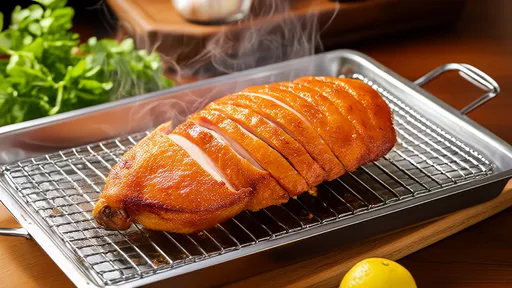
Of course, your cooking technique is the final, critical piece of the puzzle. Even a perfectly brined chicken breast can be ruined by a reckless blast of heat. The two most common culprits of dry chicken are overcooking and high-heat searing for too long. The most reliable method for stovetop cooking is to use a two-stage approach: start by searing the chicken in a hot pan to develop a beautiful golden-brown crust, then finish it in a moderate oven. This allows the inside to cook through gently without burning the outside. The most important tool in your kitchen for this is not a fancy pan, but a good instant-read thermometer. Pulling the chicken off the heat when it reaches an internal temperature of 155-160°F (68-71°C) is crucial. The residual heat will carry it over to the safe-to-eat temperature of 165°F (74°C) while ensuring it doesn’t go beyond and become dry.
Finally, and this is non-negotiable: you must let it rest. As soon as the chicken comes off the heat, the muscle fibers are tight and all the juices are pushed to the center. If you slice into it immediately, those precious juices will simply flood out onto your cutting board. Allowing the chicken to rest for 5 to 10 minutes gives the fibers time to relax and reabsorb that liquid throughout the entire cut. This ensures that every single bite is moist and flavorful, not just the first one.
Transforming your chicken breast from a dry, obligatory health food into a succulent, crave-worthy centerpiece is entirely within your grasp. It’s not about magic; it’s about method. Whether you embrace the precision of sous-vide, the simple power of a brine, or just the discipline of not overcooking and always resting, you have the power to make every fitness meal a genuinely delicious experience. Say goodbye to chewing miserably on rubbery chicken and hello to meals you’ll actually look forward to.
By /Sep 9, 2025
By /Sep 9, 2025
By /Sep 9, 2025

By /Sep 9, 2025
By /Sep 9, 2025
By /Sep 9, 2025
By /Sep 9, 2025
By /Sep 9, 2025
By /Sep 9, 2025
By /Sep 9, 2025
By /Sep 9, 2025

By /Sep 9, 2025
By /Sep 9, 2025

By /Sep 9, 2025

By /Sep 9, 2025
By /Sep 9, 2025

By /Sep 9, 2025
By /Sep 9, 2025

By /Sep 9, 2025
By /Sep 9, 2025
